
Mapping Collective Housing Journeys of Gender and Criminalization
SSHRC Postdoctoral Fellowship (2023-2025)
Bora Laskin National Fellow in Human Rights Research (2023-2024)
Department of Criminology, University of Ottawa
Co-supervisors: Jennifer Kilty & Justin Piché
About the research: The housing journeys of criminalized women and gender-diverse people reveal some of the deepest forms of economic, social, and spatial marginalization. The housing crisis extends beyond issues of supply and affordability. For many, their home is a site of both personal and systemic violence and trauma. Intersectional feminism and abolition offer critical spatial justice frameworks for understanding both the housing crisis and mass incarceration of marginalized groups as being rooted in institutionalized forms of systemic oppression. Home can also be a place of community, healing, and care.
Over the next two years, I will bring together people with lived experience, frontline community workers and activists, and academic researchers in a series of storytelling and counter-mapping workshops to produce collective stories of housing insecurity, spatial injustice, gender, and criminalization. I will use narrative analysis and speculative co-creation to examine the stabilizing and destabilizing forces, systems, and relationships that move us closer to, or further away from, being at home and being safe in community.
My key objectives include the co-creation of (a) complex representations of the role housing, or lack thereof, plays across diverse experiences of criminalization and/or experiences of transitioning back into community; (b) critical understanding of the existing knowledge, capacity, and barriers to accessing and retaining adequate housing; and (c) collective visions and speculations about what housing would be like in a world without prisons and what role safe and stable housing can play in moving us towards decarceral futures.
Stay tuned for more content including reading lists, progress updates, collaborations, etc.
The Neha review panel examines the right to housing for women, Two Spirit, trans, and gender-diverse people, and the government’s duty to uphold this right.
Neha is a Kanien’kéha-Mohawk word meaning “our ways”. It describes a way of life that is open, peaceful, supportive and healing. Seen as an ever-expanding circle, Neha will be a space where people can share their experiences and work together towards solutions.

The CAEFS Housing Project assessed the existing housing and housing-related programs across the CAEFS network; evaluated housing and housing-related barriers faced by criminalized women and gender-diverse people in accessing and retaining safe and stable housing; and advised on the co-development of a CAEFS National Housing Strategy.
This report, prepared by Dr. Sarah Gelbard on behalf of the Canadian Association of Elizabeth Fry Societies, outlines many of the impacts and consequences of housing insecurity on women and gender-diverse people impacted by criminalization, their families, and their communities. The report also includes an analysis of the bi-directional relationship between housing insecurity and criminalization. The report concludes with recommendations on articulating shared housing principles, building network capacity and responsiveness, right-to-housing advocacy and knowledge exchange, future research and collaborations, and targeted recommendations to the Neha review panel and all levels of government.
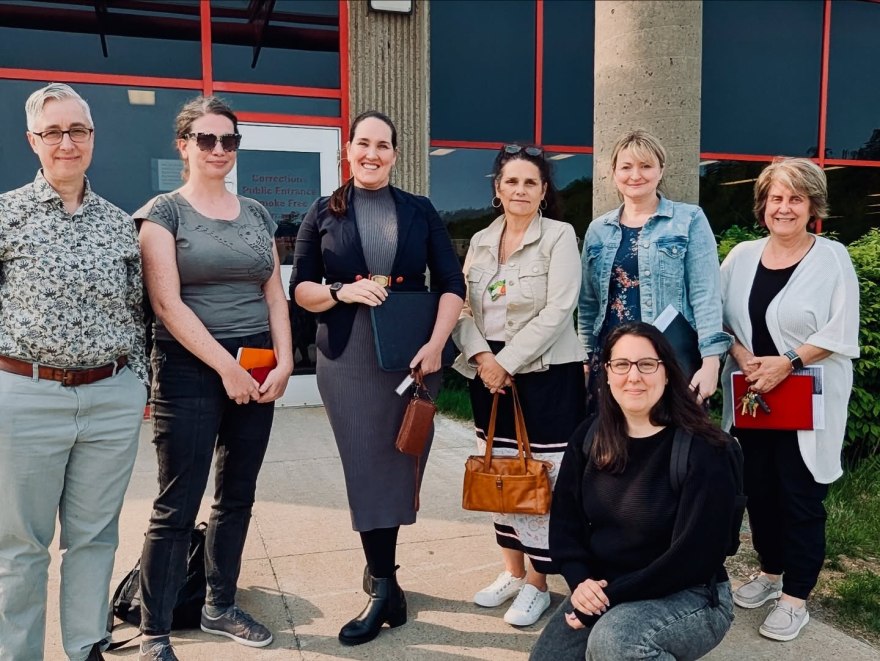
Read our full report, published on Neha Review Panel – Written Hearing (Dialogue) Record
Read the Neha Review Panel Reports on the Right to Safe, Adequate and Affordable Housing for Women, Two Spirit, Trans, and Gender-Diverse People (released November 2025)
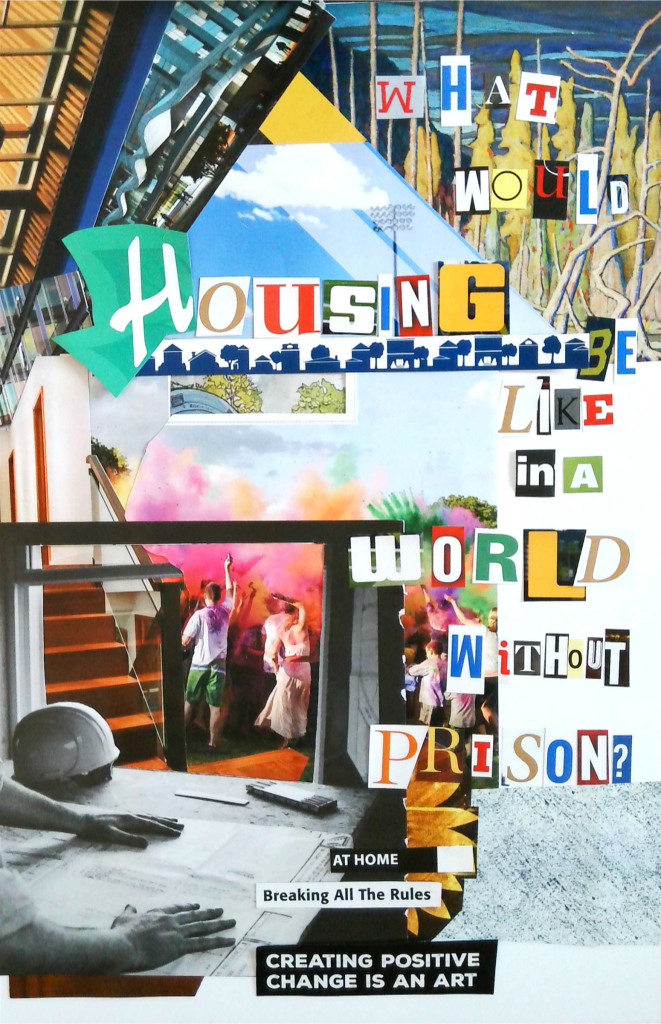
What would housing be like in a world without prisons?
A Transformative Housing Justice Zine
The speculative question—What would housing be like in a world without prisons?—opens space to explore our diverse past experiences through future visioning and freedom dreaming. The collaborative, creative, and material process of making collages opens space for us to share, to listen, to think through, and to make (representations of) those futures together.
This zine features the collaborative collages created by participants of “Making a transformative housing justice zine with collaborative speculative design workshop” at the Transforming Justice Joint National Conference, May 14th to 16th, 2025.
—
This research receives funding from the Social Sciences and Humanities Research Council. SSHRC Partnership Engage Grant.
 Sarah B. Gelbard